
According to a source close to the development, the government is set to come out with a notification in this regard by the end of this week.

Company indicates estimates of reserves needed to be cut.
Sequel to firm's announcement of cut in K-G gas reserves after long decline in output; agency says it expects decline in cash flows.
India's natural gas production is projected to jump by 52 per cent to 122 million standard cubic metres per day by 2024 as state-owned Oil and Natural Gas Corporation (ONGC) and Reliance Industries Ltd-BP combine raise output from the KG basin fields. Natural gas production in 2019-20 was 85 mmscmd, which is estimated to have fallen to 80 mmscmd in the following year, HDFC Securities said in a report. The output is projected to rise in the current fiscal that started on April 1 to 93 mmscmd, 107 mmscmd in the following year and 122 mmscmd in 2023-24, the brokerage estimated.
Likely to drill three additional exploration wells in the block before the end of 2010.

The company is in talks with BG India and Italian E&P major, ENI.

With RIL's KG-D6 output playing truant, steps need to be taken to stabilise the country's natural gas production.

Anil Ambani's Reliance Natural Resources continued its attack on the government for allegedly favouring brother Mukesh Ambani's Reliance Industries Ltd on the sale price of gas from the Krishna Godavari D6 basin. At $4.2 per million British thermal unit (mBtu), the price fixed, there is a premium of more than 100 per cent over the gas available through the administered pricing mechanism, it said.

The Krishna-Godavari (K-G) basin may prove to be a much bigger play for Reliance Industries Ltd. This follows the announcement that its D4 block could hold twice the reserves of the in-production D6 block to the north.
The agreement, which will be reviewed at the end of five years, will boost profitability of the steel firms who had been buying expensive LNG or naphtha to meet feedstock shortage at their plants, a senior official said. The ministry of petroleum and natural gas had last week asked Reliance to sell natural gas to steel firms like Essar, Ispat and Vikarm Ispat to help the nation's most prolific gas field to produce at optimum level.
A division bench of Justices J N Patel and K K Tated said that the new agreement should be as per the memorandum of understanding between the Ambani brothers Mukesh and Anil. The MoU stipulates that RIL would supply 28 mmscmd of gas to RNRL for 17 years at the rate of $2.43 per million British Thermal Units.
The company has already received an approval to spend Rs 50,000 crore (Rs 500 billion) for commercialising two of its biggest gas discoveries in the D6 block located in the KG basin. "In a letter to oil regulator Directorate General of Hydrocarbons, the company has submitted one more development plan for Rs 10,000 crore as additional capex (capital expenditure) for the block.
The Oil and Natural Gas Corporation plans to invest over US$ 5 billion to produce 25 million standard cubic meters per day of gas from its eastern offshore Krishna Godavari fields by 2013. The state-run firm on Wednesday submitted to the regulator Director General of Hydrocarbons an appraisal programme of the discoveries it had made in the KG offshore basin, putting the in-place reserves at 6.37 trillion cubic feet. ONGC also plans to produce 8,000 barrels of oil per day.
RIL expects oil and gas sales from the Krishna-Godavari basin to boost its revenues and profits significantly. The company started test production of oil from the basin around 10 days ago. The cost of production per barrel of oil is not known. RIL's share price on the Bombay Stock Exchange has fallen 9.3 per cent in the last month as world markets have tumbled on fears of an economic crisis.
The official explained that the contractor would take the worst-case scenario into account "to be on the safe side", when working out the field development plan and the probable cost of exploration and development of the block.
Bharat Petroleum Corporation lans to invest around Rs 6,000 crore (Rs 60 billion) in the exploration and production business over the next few years.
Higher price will lead to hike in fertiliser subsidy while a lower price will hit returns.

Ruias to sell Essar Steel stake to strategic partners.

Riding on a stock market boom since 2009, India Inc's chief executives have been able to salvage a lot of lost pride in their second innings.

At $12-bn valuation, this will be India's largest FDI; deal to be announced on Saturday, says Dev Chatterjee.
While lower gas output led to earnings cuts, price rises with regular ramp-ups in output will lead to earnings upgrades
Reason behind for the change in his stance: gas price increase.
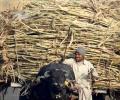
Sugarcane, which is grown by no more than 1.1 million farmers, consumes 70 per cent of water available in Maharashtra for irrigation. In contrast, about 10 million jowar, pulses and oilseeds farmers get only 10 per cent of irrigation water, points out Abhishek Waghmare.

Investors accumulated quality stocks at valuable and attractive levels.

Dispute resolution provisions in the production sharing contract remained unimplemented, while the regulator faltered, points out Jyoti Mukul.

BC Tripathi, who helms India's largest natural gas marketer and transporter -- GAIL, discusses last-mile connectivity to homes with Jyoti Mukul and Shine Jacob.

Reliance Industries on Friday hit out at Oil and Natural Gas Corp (ONGC) for suing it over KG gas dispute, saying some elements in the state-owned firm may be "misleading" the chairman D K Sarraf to hide their failure in developing the discoveries made over 13 years.

'He keeps reminding me he is senior. There is no debate in this. I have never shown any disrespect to you since you are a senior,' the PM said.

ONGC must tackle several issues first only then it can turnaround its fortunes.

CAG may not be the cure-all for the ills that afflict PPP projects and is perhaps a sub-optimal solution to the problem.
The market players are expected to react to the better than expected factory output data for the month of August, which revealed that the industrial production grew by 6.4%.

Dharmendra Pradhan lays bare the next course of action for his ministry and says RIL will have to pay the same price at which it produced the volumes.

The committee said whatever benefit RIL received in terms of the migrated gas is liable to be returned to the government.
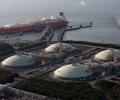
Around 15 years ago, when Reliance Industries (RIL) struck natural gas in the Krishna-Godavari (KG) basin off the east coast, the government made plans to supply that fuel cheaply to scores of generators that sprang up in India triggered by the discovery. Most of the plants, which account for 6 per cent of India's total generation capacity, operate sparsely after the KG-D6 area first failed to meet production targets, and then finally shut shop. Affordable domestic gas was why those thermal plants came up and the rate of the fuel today is why those generators hardly operate. Record liquefied natural gas (LNG) rates may yet again unravel India's ambitions to expand use of gas in industries, households and vehicles. Rates, while volatile, may stay strong this decade as developed nations with higher purchasing power embrace gas as the transition fuel.

Ramesh says that since the attitude of the Narendra Modi government is deliberately provocative and confrontational, it should not expect cooperation from the Congress.

With two of its clusters - R-Series and Satellite Series - likely to start production in the next two years, the company looks to turn around production from this business.

Chances are any such disruption will not occur on the major shipping lanes but on some edge of the ocean between India and China. Even if there is no actual disruption, the costs of averting one can be punitive. The setting for this is provided by the energy shortage both countries face, says Subhomoy Bhattacharjee.

The petroleum ministry has blamed negligence for causing the devastating fire at state-owned gas transporter GAIL India Ltd's gas pipeline in Andhra Pradesh that killed 22 people.

To increase gas availability for power plants, the Ministry of Petroleum and Natural Gas has taken various steps.
